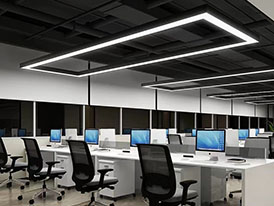
LED Diffuser Sheet
Light-diffusing polycarbonate with diffusion uniformity above 95% — hides the LEDs, keeps the output.
Industry Applications
Used in luminaires, signs, LCD displays, LED lighting and imaging display systems.
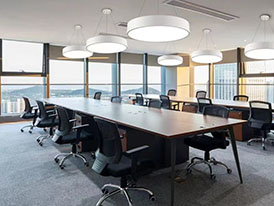
Meeting-Room Lighting
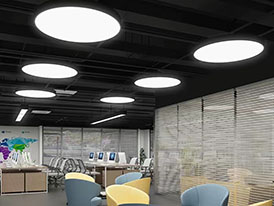
Lounge-Area Lighting
A diffuser sheet has one job: make a row of point-source LEDs look like a single continuous surface of light. Our diffuser grade achieves diffusion uniformity above 95%, developed in-house rather than bought in as a masterbatch.
The difficulty is that hiding hotspots and keeping brightness pull in opposite directions. Load a sheet with enough diffusing particles to kill every hotspot and you lose output; use too few and the LED array shows through as a row of bright dots.
Specification
| Property | Specification |
|---|---|
| Diffusion uniformity | > 95% |
| Light transmission | 55–75% depending on grade (specify the balance you need) |
| Thickness | 1 mm – 5 mm |
| Widths | 1220 / 1560 / 1820 / 2100 mm (other widths made to order) |
| Colours | Milky white, ice white; custom diffusion levels to order |
| Base material | Virgin polycarbonate — will not yellow under continuous LED exposure |
| Fire behaviour | B1 available, required for most luminaire standards |
Specifying a diffuser correctly
Three numbers decide the grade, and a sample is worth more than a datasheet:
LED pitch — how far apart the diodes sit. Wider spacing needs more diffusion.
Cavity depth — the gap between LED and sheet. A deep cavity does much of the mixing for you and lets you use a brighter, less diffusing sheet.
Required output — every point of uniformity costs transmission. Tell us the lumen target and we will pick the trade-off rather than guessing.
Send those three and we will send diffuser samples to test in your actual fixture. Sample pieces of standard grades are free.
Typical applications
- LED panel lights and troffers
- Linear luminaires and cove lighting
- Backlit signage and lightbox faces
- Illuminated ceilings and wall panels
- Display backlighting units
Questions buyers ask
Why use polycarbonate rather than acrylic for diffusers?
Polycarbonate handles heat better and will not crack when a fixture is over-tightened or dropped during installation. Acrylic diffusers are cheaper and slightly brighter, and are a reasonable choice in cool, low-vibration fittings.
Will the diffuser yellow over time?
Not from LED exposure — our sheet is extruded from virgin polycarbonate. Yellowing in diffusers almost always comes from recycled base resin or from excessive fixture heat, not from the light itself.
Can you match the diffusion of my current supplier?
Send a sample of the sheet you use now and we will match transmission and uniformity, then send you a comparison piece before you order.
Request a quote MOQ & shipping
Optical supplier check
LED diffuser sheet manufacturer review
A diffuser cannot be selected from sheet thickness alone. Give the manufacturer the LED type, pitch, distance from LED to cover, luminaire depth, target brightness and the appearance of hotspots that the design can accept. Transmission and diffusion targets must be evaluated together because improving hiding power can reduce delivered light.
Prototype before fixing the optical grade
- Define the optical target and geometry for the actual luminaire.
- Request a sample in the proposed colour, thickness and surface.
- Test it at the real LED spacing and working distance, not under unrelated room light.
- Record the approved sample and ask which batch or inspection document can accompany production.
Use the lighting application page for system context and the quality page to plan evidence. Send the optical target, drawing and sample request in the RFQ.
Where to look next
Related pages
White Opal Acrylic Sheet
Even glow-through white for lightboxes and signage — no hotspots, no visible tube or LED lines.
Lighting & Signage Sheet
Diffusers, lightbox faces and illuminated fascias — even output with no visible LED lines.
Frosted Polycarbonate Sheet
One or both faces matted — privacy and glare control while keeping ≥ 88% light transmission.
Cut to Size Polycarbonate & Acrylic
Panels at your finished dimensions, cut at the factory — no local sawing, no offcut waste, no freight on scrap.