LED Diffuser Sheet
Light-diffusing polycarbonate with diffusion uniformity above 95% — hides the LEDs, keeps the output.
Even glow-through white for lightboxes and signage — no hotspots, no visible tube or LED lines.
Opal acrylic is white sheet engineered to glow evenly when lit from behind. The whole skill is in the loading: too little and the LEDs show through as bright stripes, too much and the sign looks grey and dead when switched off.
We supply several opacity grades so the sheet can be matched to your cavity depth and lamp spacing, rather than forcing one grade to work in every fixture.
| Property | Specification |
|---|---|
| Opacity grades | Multiple, from high-transmission to high-hiding |
| Light transmission | 30–70% depending on grade |
| Thickness | 2 mm – 10 mm |
| Widths | 1220 mm and 1830 mm standard; other widths to order |
| Colour stability | UV stable — will not yellow in illuminated service |
| Face options | Gloss both faces, or one face matte |
| Process options | Cast or extruded |
What the word actually describes is light behaviour, not a separate polymer: opal sheet scatters light through its thickness so an LED or tube behind it reads as an even glow rather than a bright spot. Three things it is regularly confused with:
Our opal grades run 30–70% light transmission. Transmission and hiding power move in opposite directions, and the right point on that range is set by the box, not by preference:
| Where on the 30–70% range | Hiding power | Typically suits |
|---|---|---|
| Higher transmission (towards 70%) | Lower | Deeper cavities and dense LED strips, where the light already has room to mix and brightness matters more than hiding |
| Mid range | Balanced | The general-purpose signage and luminaire choice when the box is conventional |
| Lower transmission (towards 30%) | Higher | Shallow boxes and widely spaced lamps, where visible hotspots or lamp lines are the risk being designed out |
Brightness lost to a higher-hiding grade can usually be bought back with more or brighter lamps; a hotspot cannot be fixed after the box is built. That asymmetry is why we send samples rather than quote a grade from a description.
Two measurements decide it, and getting them wrong is the most common cause of a rejected sign:
Cavity depth — the gap between lamp and sheet. A shallow lightbox needs a higher-hiding grade because the light has no distance in which to mix.
Lamp spacing — widely spaced LEDs need more hiding power than a dense strip.
Send both figures and we will send samples of two or three grades to test in the actual box before you commit to a production quantity.
Yes. Plexiglas and Perspex are brand names for PMMA, the same polymer we extrude and cast. Opal acrylic, opalescent acrylic, milky white acrylic and white opal acrylic all describe the same white light-diffusing sheet.
Our grades run 30 to 70% depending on the opacity chosen. Higher transmission gives a brighter panel with less hiding power; lower transmission hides lamps better and costs brightness. Send the cavity depth and lamp spacing and we will send samples of two or three grades to test in the actual box.
Acrylic opal is the usual choice for interior signage and luminaires: it is cost-effective and UV stable in illuminated service. Choose polycarbonate diffuser where the panel faces impact, vandalism or a fire-performance requirement, since polycarbonate is far tougher and available in flame-retardant grades.
Opal is translucent and designed to be lit from behind. Solid white is opaque and used where light should not pass. Ordering the wrong one is a common and expensive mistake.
Not in our sheet — PMMA is inherently UV stable. Yellowing in illuminated signage usually comes from cheap recycled base material or from lamps running too hot against the face.
Yes. Send a sample piece and we will match transmission and colour, then supply a comparison sample before you order.
From the factory
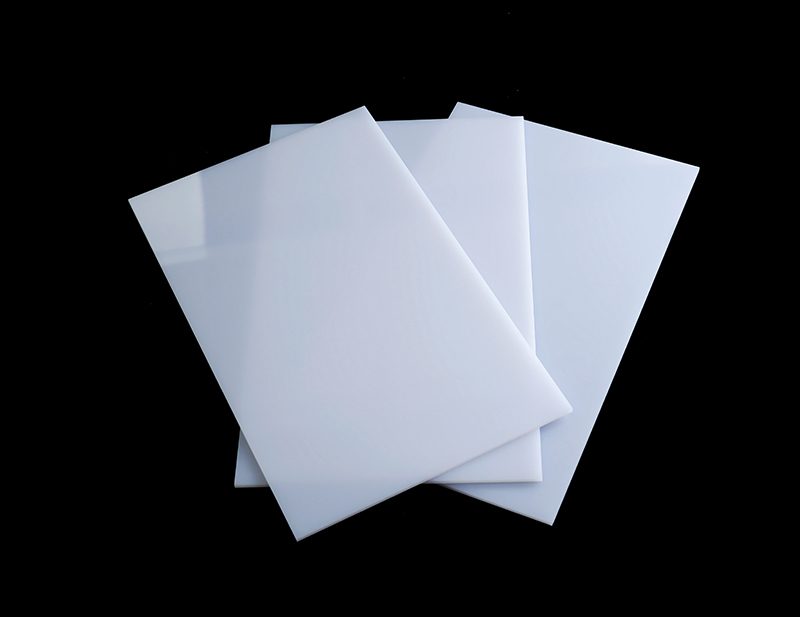
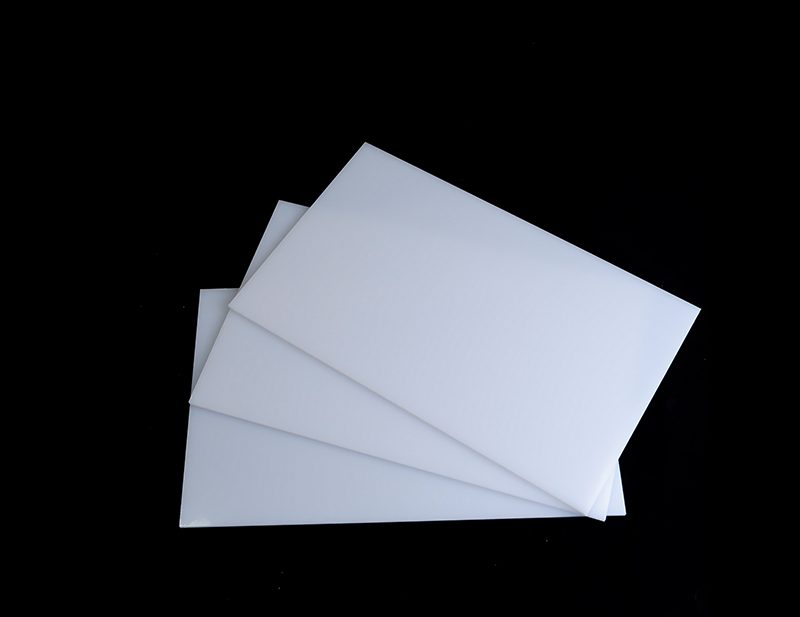
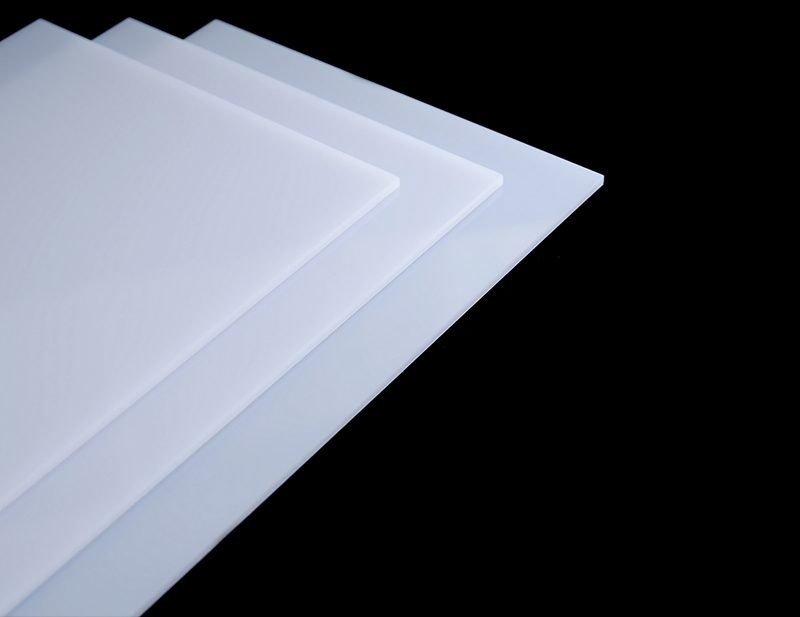
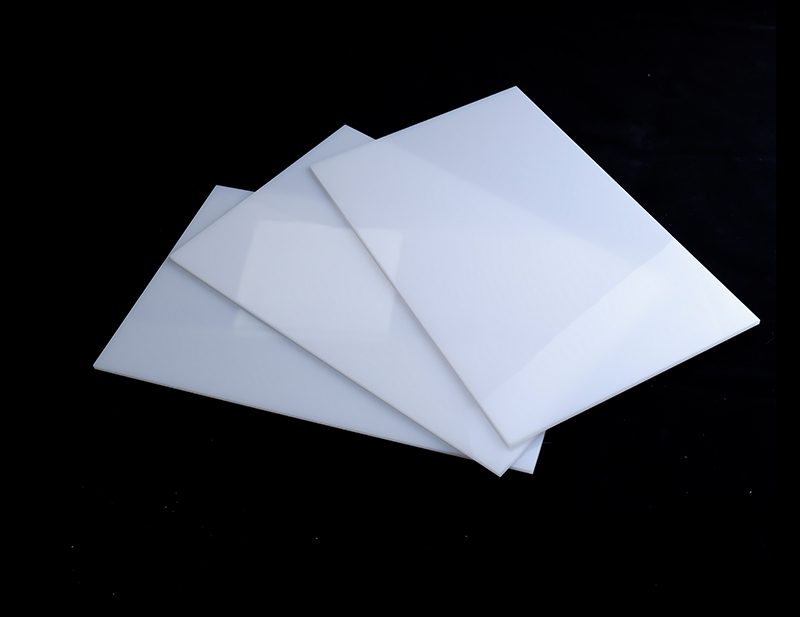
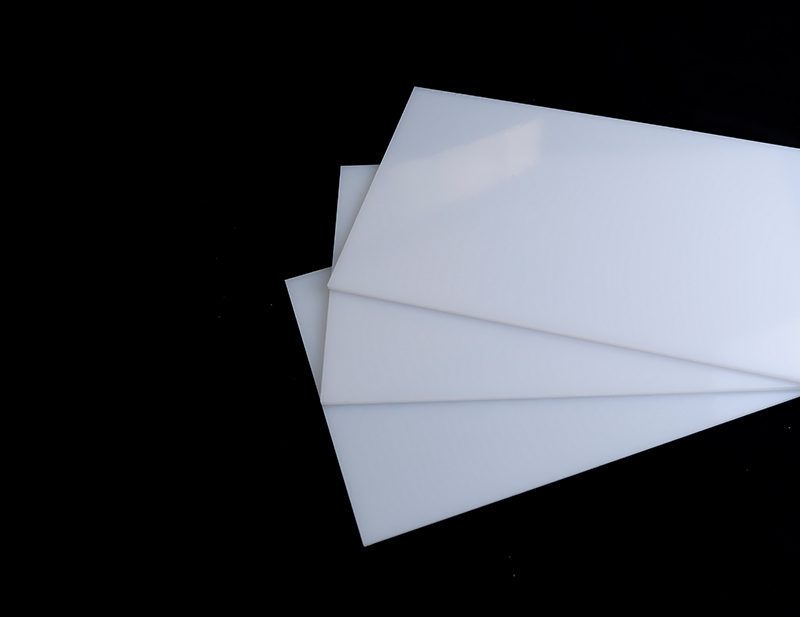
Images show the referenced product, process or application. Ask for a current production sample when colour, finish or fit must be approved.
Where to look next
Light-diffusing polycarbonate with diffusion uniformity above 95% — hides the LEDs, keeps the output.
Diffusers, lightbox faces and illuminated fascias — even output with no visible LED lines.
Matte on one or both faces — privacy and soft light, with a surface that hides fingerprints.
Transparent, translucent and opaque colours matched to Pantone, RAL or your sample.
Start with a trial order
Thickness, size, colour, quantity — or just upload the drawing. We quote in USD on FOB, CIF or DDP terms, from 100 m² or 1 tonne. No full-container commitment required.