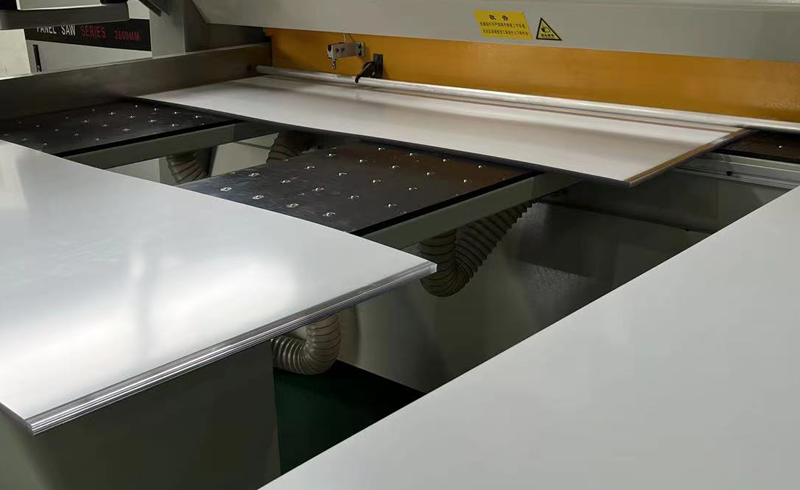
01. Cutting
Sheets are set on the cutting machine to the required length and width.
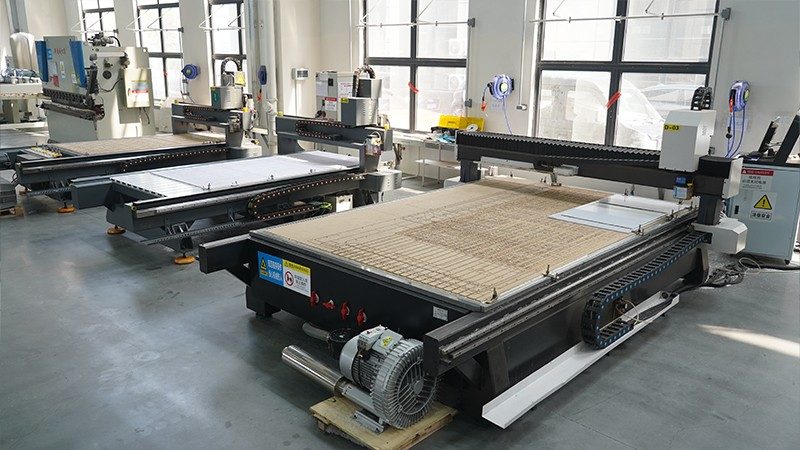
Profiles, cut-outs, holes and engraving from your DXF, DWG or STEP files — 22 machines.
Anything more complex than a rectangle runs on our CNC centres. Profiles, internal cut-outs, counterbored holes, engraved detail and 3D contour work all come off the same drawing file you already have.
CNC cutting tolerance can reach ±0.1 mm, subject to material, thickness, part geometry and drawing review.
| CNC routing | Laser cutting | |
|---|---|---|
| Polycarbonate | Yes — the correct method | No — leaves a yellowed, brittle edge |
| Cast acrylic | Excellent | Yes, frosted edge |
| Extruded acrylic | Fair | Excellent — polished edge |
| Thick material | Up to 30 mm+ | Practical to about 20 mm |
| Fine detail | Limited by cutter diameter | Very fine |
The important line is the first one: polycarbonate should not be laser cut. The heat leaves a discoloured, stressed edge that cracks in service. Any supplier offering laser-cut polycarbonate is telling you something about their process control.
Jiangsu Xinjincheng provides diversified secondary processing to customer drawings and technical requirements.
Sheets are set on the cutting machine to the required length and width.
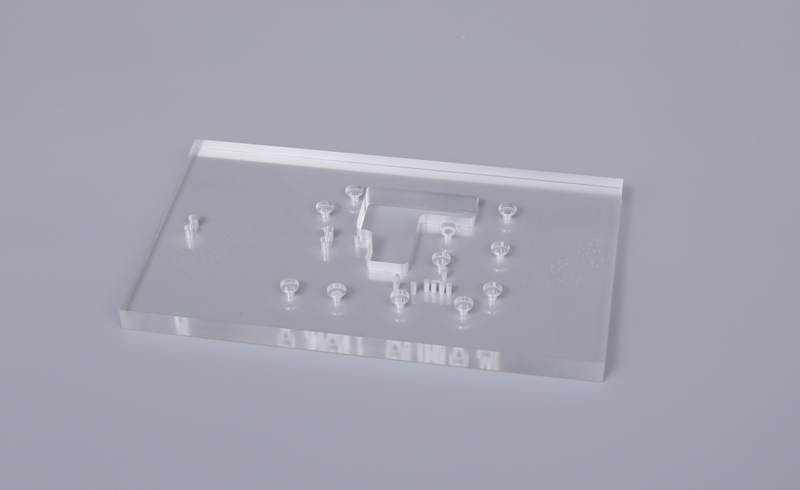
Hole diameter and position follow the customer drawing; routing equipment is used to reduce cracking risk in acrylic.
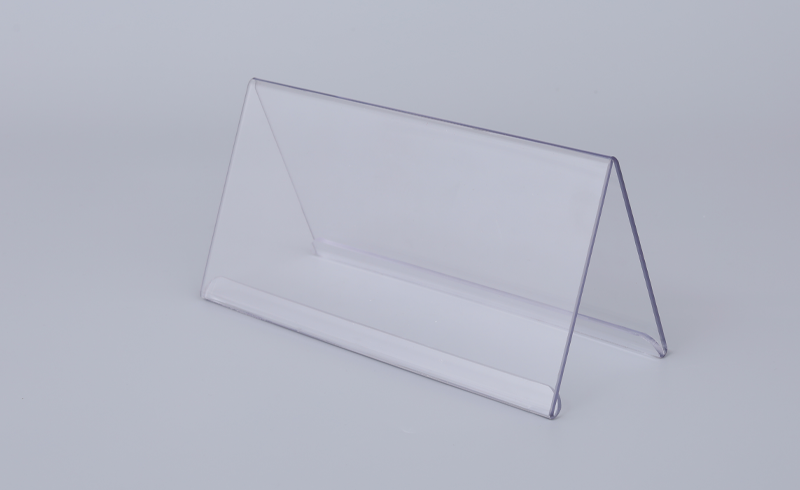
Polycarbonate can be cold-bent at room temperature where the design permits, or hot-bent for formed parts.
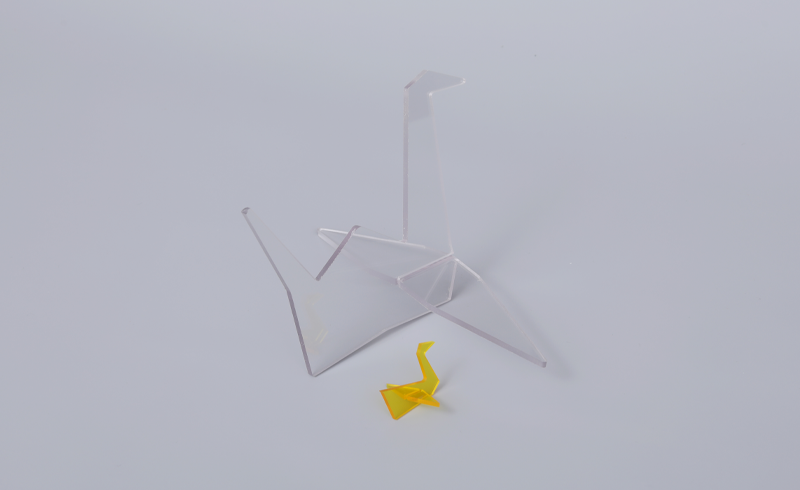
Parts are machined to drawings, including chamfers, bevels, rounded edges and countersinks.
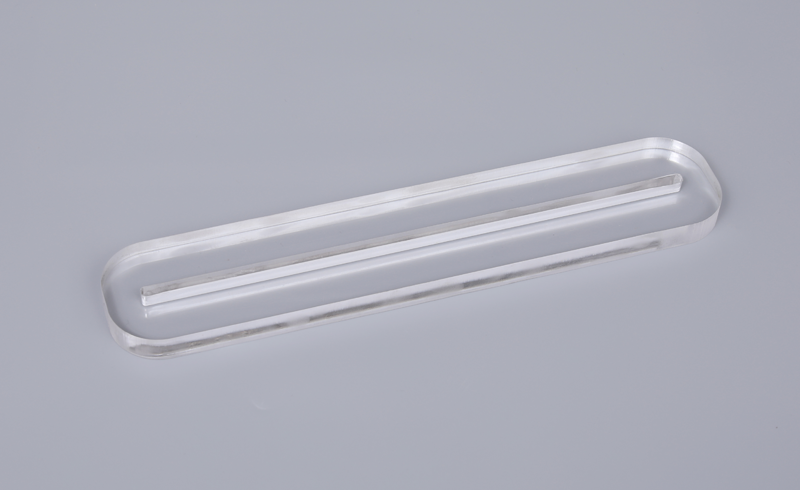
Dedicated cutters produce specified edges and internal grooves to the drawing geometry.
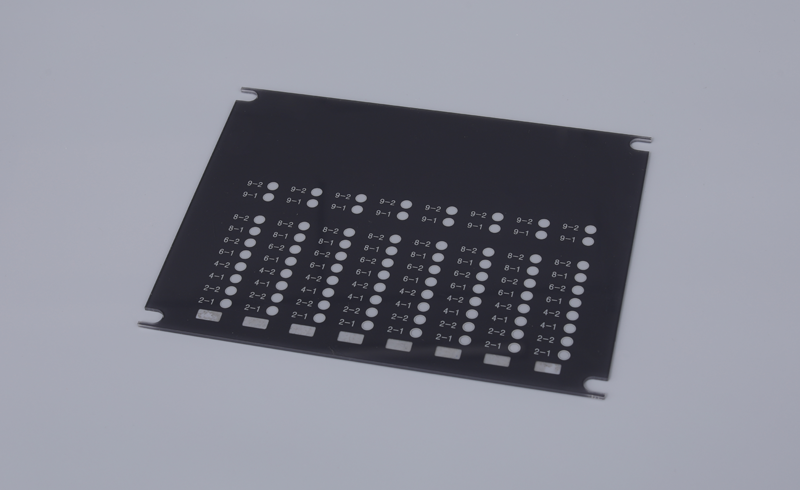
Front or reverse printing, surface treatment and colour work can be applied to sheet components from customer artwork.
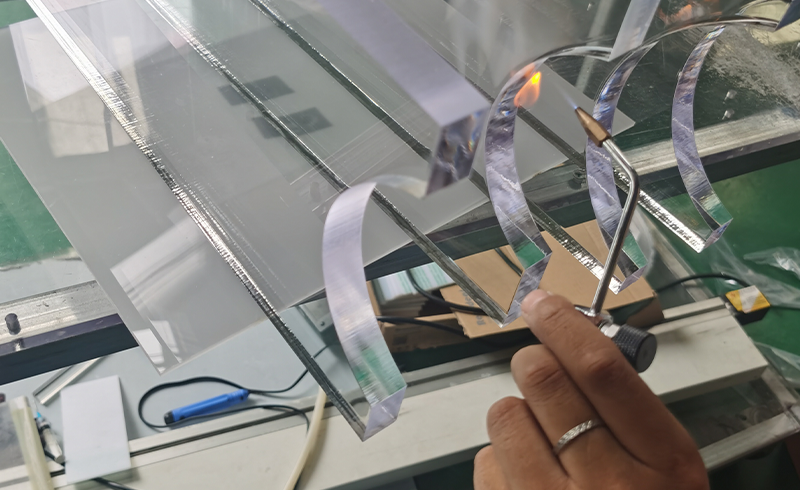
Buff-wheel, flame or laser processes can be selected to improve edge clarity and finish.
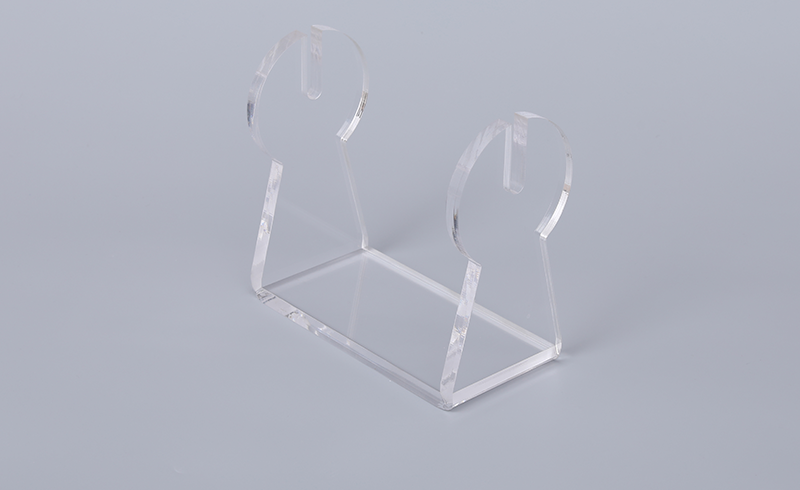
Laser engraving, cutting and marking are available where compatible with the selected sheet material.
Plastura’s Jiangsu fabrication team quotes CNC laser cut polycarbonate from the drawing. State the sheet material, thickness, finished dimensions, tolerance, edge finish, file format, and quantity. Standard stock sizes and colours normally run in 7–10 days; non-standard extrusion in 12–18 days; allow another 3–7 days for CNC work. The published starting point is 100 m² or 1 tonne, quoted in USD on FOB, CIF or DDP terms. See MOQ, lead time and shipping for planning details.
DXF, DWG, STEP, IGES and PDF, up to 90 MB per file through the quote form. Vector geometry is preferred; we can work from a dimensioned PDF but it takes longer.
Yes, engraved or laser-marked depending on material and depth. Send the artwork as vector geometry for the cleanest result.
Yes — diamond polished for optical clarity, or flame polished on cast acrylic. Specify per edge, since polishing every edge on a hidden part is wasted cost.
Request a quote MOQ & shipping
Buyer planning module
For: It is for engineers and buyers who need cut or machined sheet parts from their own drawings.
Key variables: Variables are file format, material and grade, thickness, part size, critical dimensions, edge finish, and quantity.
Limit: CNC tolerance is an order-specific statement: achievable and quoted tolerances are confirmed per drawing and order.
Next step: Send the drawing with material, thickness, critical dimensions, finish, quantity, packing, and destination.

Send your drawing in the format your CAD system uses (for example DXF, DWG, STEP, IGES, or PDF) and ask which formats are currently accepted.
Use the existing tolerance paragraph above as the manufacturer-declared, order-specific reference; confirm the applicable value against the approved drawing, material, and quotation before release.
Distinguish capability review from acceptance: the supplier first reviews whether the drawing can be made, then states the tolerance for the specific geometry before any acceptance criteria are agreed.
Tolerance policy covers linear dimensions, hole positions, angles, thickness, and profile. Ask the supplier to state the critical dimensions and the tolerance required for each before quoting.
First-article approval: agree which critical dimensions are measured on the first article, who approves it, and which records are provided with the approval.
Kerf, tool radius, minimum hole or slot size, edge distances, stress and heat effects, protective film, and edge finish are process-specific. Ask which rules apply to your material, thickness, and geometry.
Ask how packaging of finished parts is handled and how parts are packed and protected before shipping, and state destination and target date in the RFQ.
Agree the drawing review flow: submission and revision, feasibility and tolerance review, first-article approval, then production release. Confirm the revision that will be produced.
Send the drawing, material, thickness, critical dimensions, tolerance, finish, quantity, packing, destination, and target date with the RFQ.
Do not assume laser processing is suitable for every PC or PMMA grade, thickness, protective film, or edge requirement. Ask which process, for example CNC routing or laser cutting, is suitable for your combination; the table below records order inputs and open questions, not an assertion of which process the supplier operates.
| Choose this when | Do not choose this when |
|---|---|
| you need machined parts from a drawing with agreed critical dimensions | you need a standard sheet cut to size without tolerance review; cut-to-size may be the simpler route |
| Property | Value | Unit | Product Grade | Thickness Specimen | Test Method Standard | Evidence Status | Qualification | Process | Material |
|---|---|---|---|---|---|---|---|---|---|
| Standard quoted tolerance | Confirm against required standard and order grade | order-specific | order-specific grade | per order drawing | to be agreed with the order | not publicly verified | quoted tolerance confirmed in the quotation and approved drawing | CNC routing or laser cutting — ask which process applies to your geometry | PC and PMMA grades — ask per grade, thickness, protective film, and edge requirement |
| Best achievable tolerance | Confirm against required standard and order grade | order-specific | order-specific grade | per order drawing | to be agreed with the order | not publicly verified | depends on material, thickness, part size, and process | CNC routing or laser cutting — ask which process applies to your geometry | PC and PMMA grades — ask per grade, thickness, protective film, and edge requirement |
| Thickness range | Confirm against required standard and order grade | mm (order-specific) | order-specific grade | per order drawing | to be agreed with the order | not publicly verified | confirmed against the material and order | CNC routing or laser cutting — ask which process applies to your geometry | PC and PMMA grades — ask per grade, thickness, protective film, and edge requirement |
| Maximum workpiece | Confirm against required standard and order grade | order-specific | order-specific grade | per order drawing | to be agreed with the order | not publicly verified | confirmed against the available machine envelope | CNC routing or laser cutting — ask which process applies to your geometry | PC and PMMA grades — ask per grade, thickness, protective film, and edge requirement |
| Edge and heat limitation | Confirm against required standard and order grade | n/a | order-specific grade | per order drawing | to be agreed with the order | not publicly verified | kerf, tool radius, and edge finish rules confirmed per geometry | CNC routing or laser cutting — ask which process applies to your geometry | PC and PMMA grades — ask per grade, thickness, protective film, and edge requirement |
| Inspection method | Confirm against required standard and order grade | n/a | order-specific grade | per order drawing | to be agreed with the order | not publicly verified | first-article and final measurement agreed with the order | CNC routing or laser cutting — ask which process applies to your geometry | PC and PMMA grades — ask per grade, thickness, protective film, and edge requirement |
Review date: 2026-08-26. Fact owner: Unassigned — owner approval required. Applicable grade: order-specific grades and drawings.
The date stated is the local draft evidence-gate review date, not a company fact-verification or department approval date. Ask in the RFQ which drawing-review, first-article, and material documents can be provided.
Ask in the RFQ whether a batch COA or material certificate can be provided with machined parts.
Company-declared, order-specific capability; confirm it with the quotation and approved drawing.
Related buyer paths
Where to look next
Panels at your finished dimensions, cut at the factory — no local sawing, no offcut waste, no freight on scrap.
The fabricator’s grade — machines cleanly, engraves sharply, flame-polishes to an optical edge.
Line bending, drape forming and 3D contour work — curves that would need tooling in other materials.
Non-standard thickness, width, colour and construction — what we can make, and what we cannot.
Start with a trial order
Thickness, size, colour, quantity — or just upload the drawing. We quote in USD on FOB, CIF or DDP terms, from 100 m² or 1 tonne. No full-container commitment required.