Energy Storage Insulation Panels
Battery module barriers and electrical insulation — flame retardant, dimensionally stable, machined to drawing.
B1 rated, ignition point 580 °C, self-extinguishing, no toxic smoke — for rail, public interiors and guarding.
Polycarbonate is inherently difficult to burn. Our standard sheet reaches a B1 rating, ignites only at 580 °C, self-extinguishes when the flame is removed, and does not release toxic gas or contribute to flame spread.
For applications where B1 is not enough, we supply V0-rated sheet compounded from V0 resin — not surface-treated. Surface treatments pass the initial test and fail after cleaning; compounded flame retardancy goes through the thickness and does not wash off.
| Property | Specification |
|---|---|
| Standard fire rating | B1 |
| Ignition point | 580 °C |
| Burning behaviour | Self-extinguishing on flame removal |
| Smoke | No toxic gas; does not promote flame spread |
| Upgraded grade | V0 available, compounded from V0 resin |
| Thickness | 1 mm – 15 mm |
| Widths | 1220 / 1560 / 1820 / 2100 mm (other widths made to order) |
| Colours | Clear, opal, grey, custom |
| Temperature range | −40 °C to 120 °C |
No. It is compounded into the resin so it runs through the full thickness of the sheet. Coated flame-retardant sheet loses its rating once the surface is abraded or cleaned repeatedly — which is exactly what happens in service.
Yes. Tell us which standard your project is assessed against — EN, ASTM, UL or a national equivalent — and we will confirm what documentation we can provide before you order.
Clear FR grades carry a very slight tint compared with standard clear polycarbonate. In opal, grey and coloured grades there is no visible difference.
Request a quote MOQ & shipping
Fire-performance supplier check
“Flame retardant” is not one transferable rating. The required result depends on the named test standard, classification, specimen thickness, colour or formulation, conditioning and end-use rules. Do not approve a grade from an unspecific fire claim or assume that a result for one thickness covers another.
The public page describes product options but does not independently verify a universal fire rating. Review the evidence route on the quality-control page and submit the standard, part conditions and document requirement in the RFQ.
From the factory
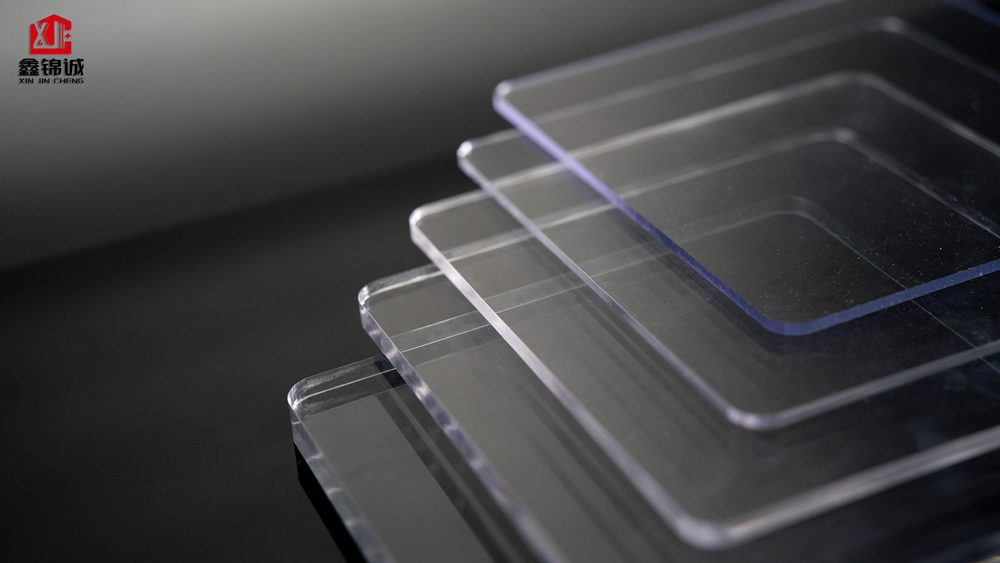
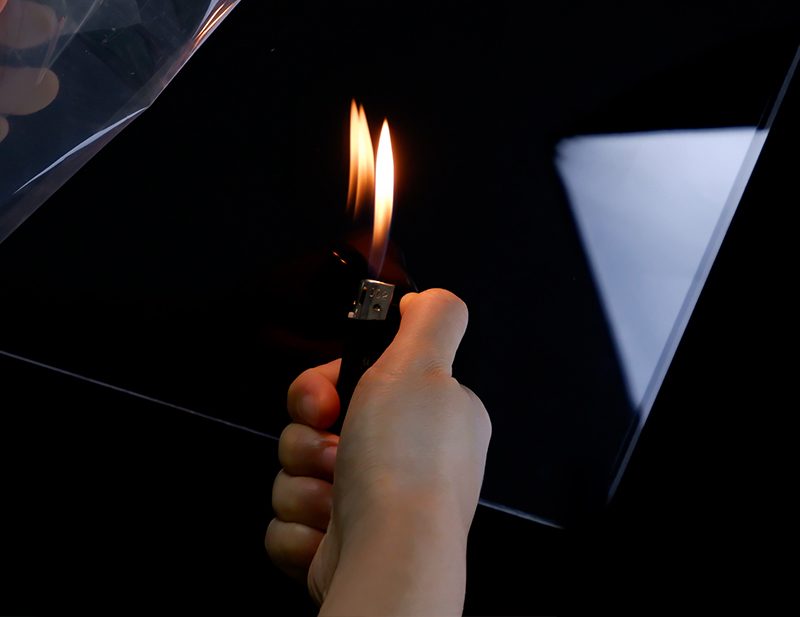

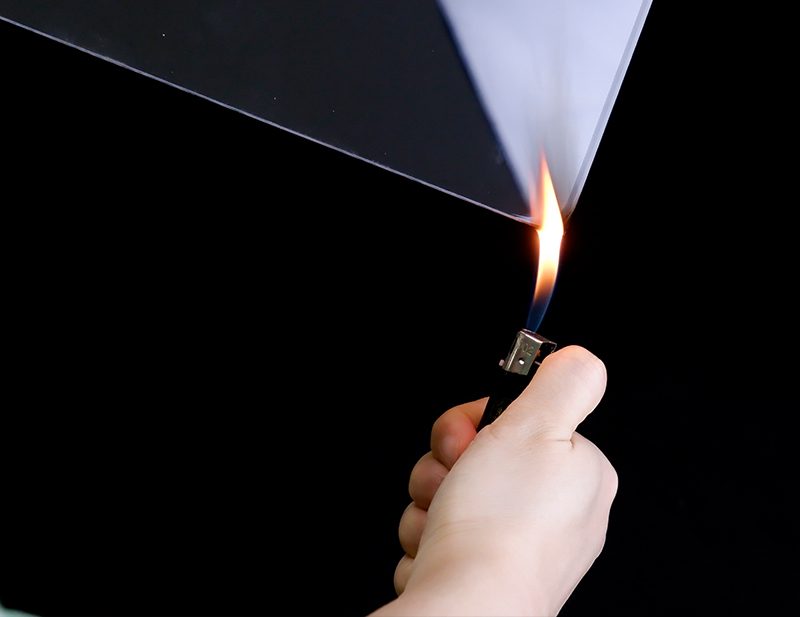
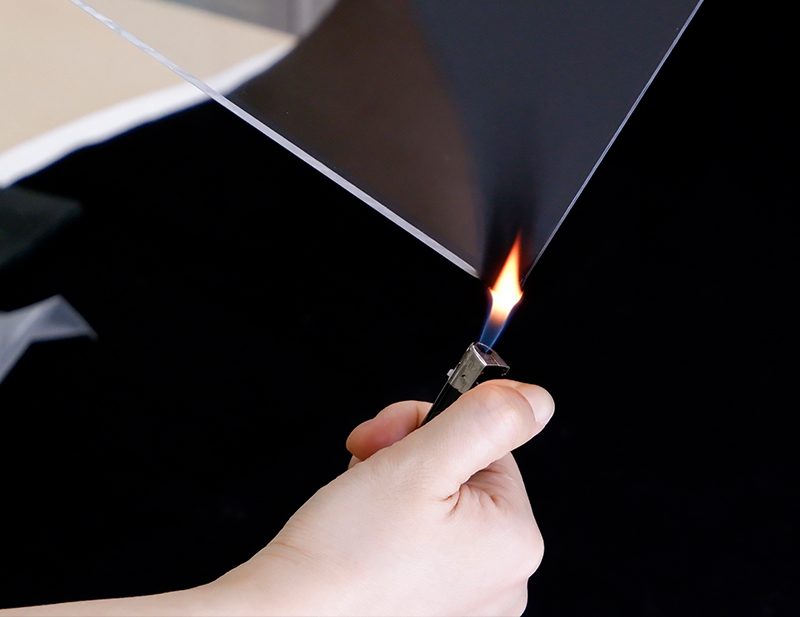
Images show the referenced product, process or application. Ask for a current production sample when colour, finish or fit must be approved.
Where to look next
Battery module barriers and electrical insulation — flame retardant, dimensionally stable, machined to drawing.
Guards and viewing windows that stop a thrown tool — impact rated, fire rated, optionally anti-static.
Surface resistivity made to your specification — for electronics assembly, cleanrooms and equipment windows.
Named resin suppliers, testing against EN and ASTM methods, and what we will tell you when something goes wrong.
Start with a trial order
Thickness, size, colour, quantity — or just upload the drawing. We quote in USD on FOB, CIF or DDP terms, from 100 m² or 1 tonne. No full-container commitment required.