Multiwall Polycarbonate Sheet
Twin-wall, triple-wall and honeycomb structures — lighter and warmer than solid sheet, for roofing and greenhouses.
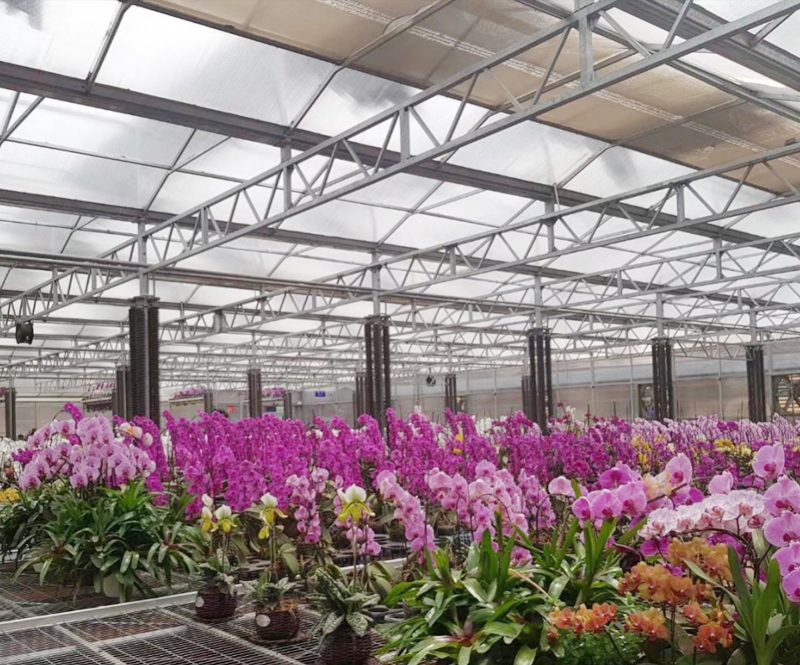
Horticultural glazing that holds heat, survives hail and diffuses light onto the crop.
Multiwall polycarbonate has largely replaced glass in commercial horticulture for three reasons: the trapped air insulates, so heating costs fall; it does not shatter under hail; and it diffuses light, which spreads growth across the canopy instead of scorching the top leaves.
Diffusion is the underrated one. Direct light through clear glass produces hot spots and shaded lower foliage. Diffused light reaches deeper into the crop.
| Condition | Specify |
|---|---|
| Mild climate, unheated | Twin-wall 6–8 mm |
| Cold winters, heated | Triple-wall or X-structure 10–16 mm |
| Hail risk | Solid 4 mm, or thicker multiwall |
| High light crops | Clear with UV on the outer face |
| Heat-sensitive crops | Opal or diffusing grade |
Anti-drip (anti-fog) treatment is worth specifying for any heated house: it makes condensation run down the inside face as a film instead of dripping onto the crop, which reduces disease pressure. See anti-fog sheet.
A greenhouse is the hardest test a polycarbonate panel gets: full sun, every day, for the whole service life, with the panel doing the job of the roof. UV protection is what decides whether that panel is still working in year fifteen or has gone yellow and brittle in year three.
It is co-extruded, not coated. The UV layer is extruded into the surface of the sheet as it is made — it is not a film applied afterwards, not a spray, and not an additive dispersed evenly through the thickness. Three things follow from that: it cannot be added to a panel later, it cannot wear or be polished off in normal service, and it is directional. Our multiwall is UV co-extruded on the exposed face as standard.
The failure is almost always installation, not the sheet. A panel fitted with the protected face downwards has no UV protection where the sun hits it. Sheet without UV protection, or fitted upside down, can fail in three years, against the 15–20 years a correctly fitted panel normally serves while retaining at least 85% light transmission at ten years. The protected face carries a marked film — check it on the pallet, before the panels go up, because after installation the only way to find out is to wait.
What UV protection does not do. It is not impact protection: hail resistance comes from thickness and structure, so specify solid 4 mm or a thicker multiwall where hail is a real risk. It does not remove thermal movement: polycarbonate still expands roughly 3 mm per metre over a 50 °C swing, so fixing holes still have to be oversized. And it does nothing about condensation dripping onto the crop — that is anti-drip treatment, a separate specification.
Tell us what the crop needs. UV is not simply something to block. Some crops are grown deliberately under UV-blocking cover for pest and disease management; others need UV transmission for colouration, flavour compounds or pollinator behaviour. These are different requirements, not different amounts of the same thing. State the crop and the growing regime with your enquiry and we will confirm what is available rather than assume the default.
For polycarbonate greenhouse sheet projects, Plastura checks greenhouse covering selection before confirming the material. Send the span or finished dimensions, exposure and load conditions, preferred appearance, fabrication needs, and quantity. Standard stock sizes and colours normally run in 7–10 days; non-standard extrusion in 12–18 days; allow another 3–7 days for CNC work. The published starting point is 100 m² or 1 tonne, quoted in USD on FOB, CIF or DDP terms. See MOQ, lead time and shipping for planning details.
For most growers, yes: better insulation, no shattering, lighter frames and diffused light. Glass keeps a small edge in absolute light transmission and surface durability over very long periods.
UV-protected face outwards, flutes running vertically so condensation drains. Both mistakes are common and both shorten panel life dramatically.
No. It is co-extruded into the surface while the sheet is being made, so it is part of the sheet rather than something applied to it. It cannot be polished off in normal service, and it cannot be added to a panel that was made without it. That is also why the panel is directional and has to be laid with the protected face outwards.
Our standard for multiwall is UV co-extrusion on the exposed face, which is what a roof or a single-skin wall needs. If both faces of your panel will see direct sun — some vertical glazing and freestanding structures do — say so with the enquiry and we will confirm what is available for the grade and thickness you need.
With UV protection and correct installation, 15–20 years is normal, retaining ≥ 85% light transmission at ten years.
Request a quote MOQ & shipping
From the factory
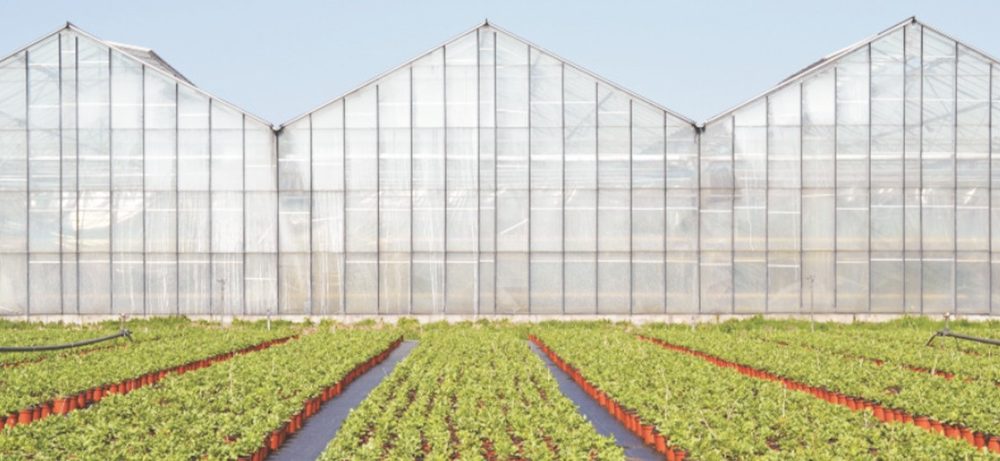

Images show the referenced product, process or application. Ask for a current production sample when colour, finish or fit must be approved.
Where to look next
Twin-wall, triple-wall and honeycomb structures — lighter and warmer than solid sheet, for roofing and greenhouses.
Condensation-resistant for at least five years — for cold rooms, food display and viewing windows.
Roof lights, walkway covers and daylighting — where span, load and UV orientation decide the specification.
Panels for secondary glazing, safety glazing and replacement windows — light, unbreakable, and cut to your survey sizes.
Start with a trial order
Thickness, size, colour, quantity — or just upload the drawing. We quote in USD on FOB, CIF or DDP terms, from 100 m² or 1 tonne. No full-container commitment required.