Frosted Polycarbonate Sheet
One or both faces matted — privacy and glare control while keeping ≥ 88% light transmission.
Embossed patterns rolled into the surface — privacy, grip and glare control without losing strength.
Textured polycarbonate carries a pattern embossed by the calender roll as the sheet leaves the die. Because the texture is formed in the melt rather than applied afterwards, it is part of the sheet and cannot wear away.
Different patterns solve different problems: prismatic textures redirect light, diamond and stucco patterns obscure the view, and coarse textures add grip underfoot.
| Property | Specification |
|---|---|
| Patterns | Diamond, prismatic, stucco, linear; custom rolls for volume orders |
| Faces | One or both faces textured |
| Thickness | 1 mm – 12 mm |
| Widths | 1220 / 1560 / 1820 / 2100 mm (other widths made to order) |
| Light transmission | Typically 80–88% depending on pattern depth |
| Impact strength | Unchanged from standard solid sheet |
No. It is embossed into the sheet during extrusion, unlike printed or laminated patterns which do wear.
Yes, for volume orders — a custom embossing roll is a tooling investment, so it makes sense above a certain annual quantity. Tell us your expected volume and we will quote the tooling separately.
No measurable reduction. Light transmission drops slightly with pattern depth; impact performance is unchanged.
Request a quote MOQ & shipping
“Textured” does not define one optical result. Privacy depends on the pattern, sheet colour, lighting behind the panel, viewing distance and which face points toward the viewer. Send a photograph or sample reference and describe what must remain visible through the panel.
| Use | Selection priority | Order detail to provide |
|---|---|---|
| Interior partition | Privacy with useful daylight | Viewing distance, backlighting and frame opening |
| Machine or equipment window | Impact exposure and controlled visibility | Coolant or cleaner contact, holes, edge finish and thickness |
| Lighting cover | Diffusion and surface appearance | LED layout, diffuser distance and target lit appearance |
| Fabricated panel | Texture after bending or forming | Texture orientation, bend direction and finished drawing |
Confirm whether the textured face is exposed to touch, dust, grease or chemical cleaners. Texture can hide light surface marks but may retain contamination differently from a smooth sheet. Critical holes, bends and visible edges should be marked on the drawing so feasibility can be reviewed against the chosen pattern.
Send the pattern reference, colour, thickness, finished dimensions, quantity and application through the textured-sheet RFQ route.
Texture and tooling check
A texture reference should describe what the surface must do: obscure a view, redirect light, reduce visible scratches or create a decorative appearance. Trade names are not reliable across suppliers, so approve the visual result against a physical sample or an agreed reference rather than a texture name alone.
Use frosted polycarbonate when the priority is a matte privacy finish rather than a defined embossed pattern. Attach the reference image or drawing and request a matching production sample in the RFQ.
From the factory
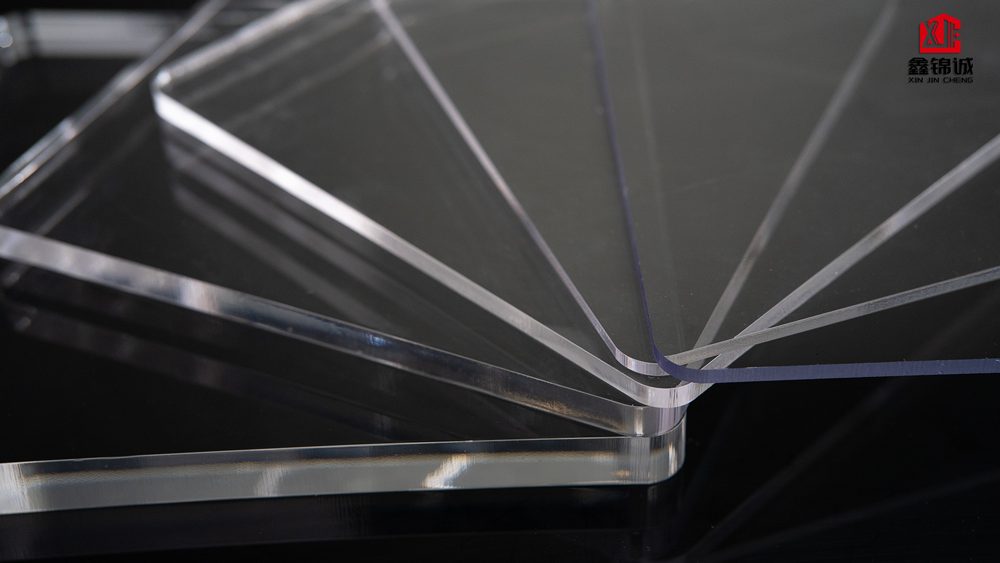
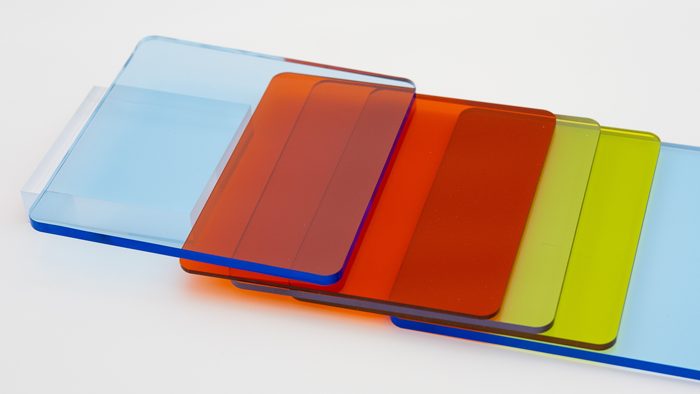

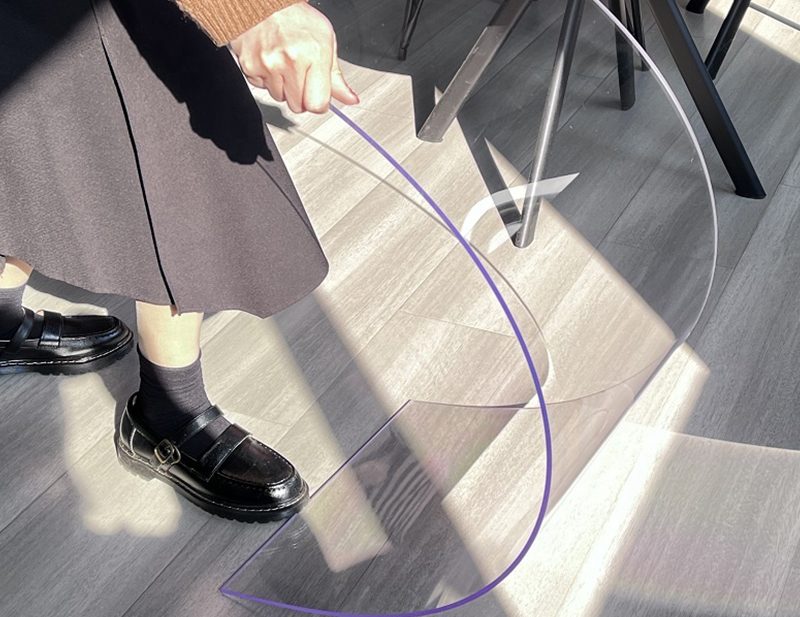
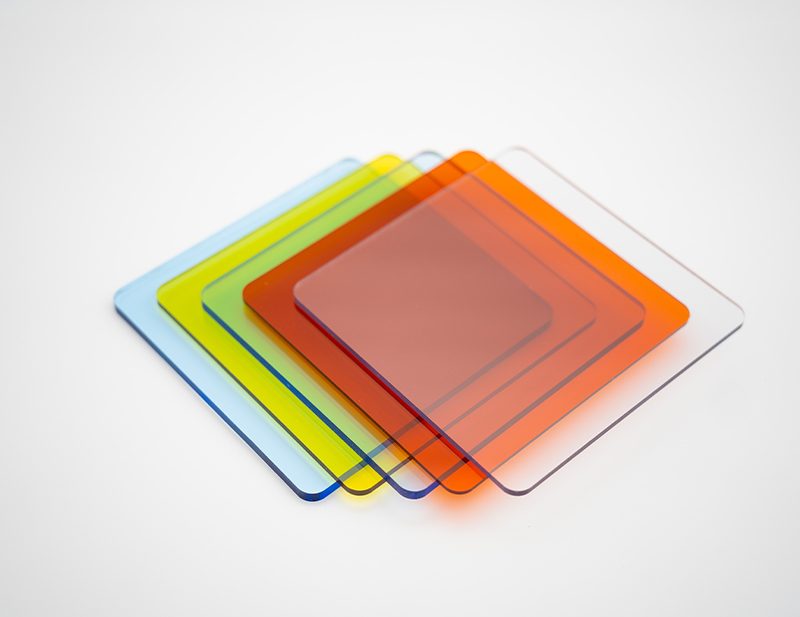
Images show the referenced product, process or application. Ask for a current production sample when colour, finish or fit must be approved.
Where to look next
One or both faces matted — privacy and glare control while keeping ≥ 88% light transmission.
The general-purpose grade — around 200× the impact strength of glass, and it will not shatter.
Office screens, dividers and decorative glazing — light, safe and easy to fabricate.
Non-standard thickness, width, colour and construction — what we can make, and what we cannot.
Start with a trial order
Thickness, size, colour, quantity — or just upload the drawing. We quote in USD on FOB, CIF or DDP terms, from 100 m² or 1 tonne. No full-container commitment required.