This page compares polycarbonate and acrylic sheet on impact, stiffness, scratch, optical, UV, thermal, forming, machining, fire, and failure behaviour.
It is for specifiers choosing between the two families for one application.
Selection variables: The deciding variables are exposure, optics, environment, and the standard that applies.
Boundary: The comparison is qualitative because family behaviour shifts with grade, thickness, and construction.
Next action: Take the screened candidate into the RFQ with your application and standards.
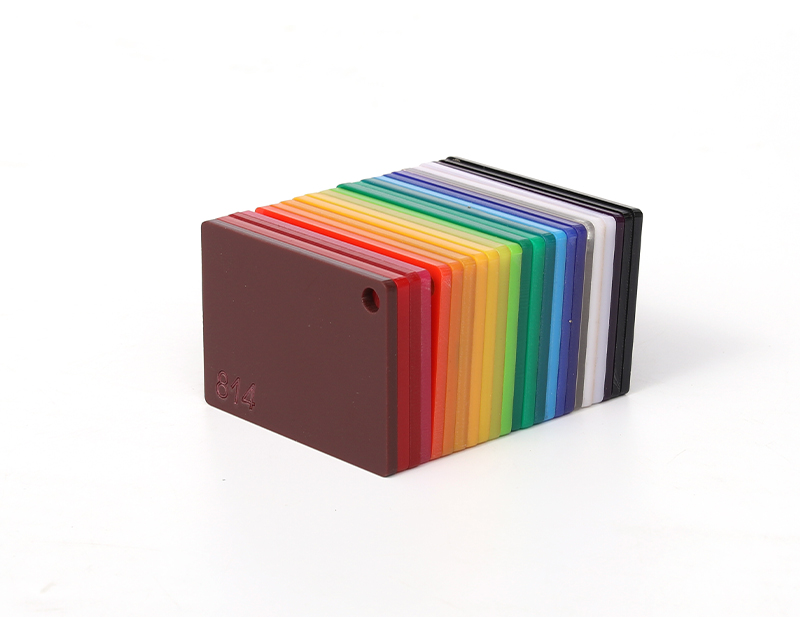
Basis of comparison: this page compares the typical behaviour of polycarbonate and acrylic sheet families, not specific grades. Each family covers a range, and the grade, thickness, colour, and coating can shift any single behaviour, so treat the table as a screening tool rather than a ranking.
Impact and stiffness: polycarbonate families are usually screened first where impact and breakage risk dominate, while acrylic families are usually screened where stiffness and scratch resistance matter more; the choice depends on the exposure you can control in the installed design.
Optics and weathering: both families offer clear, tinted, and diffused options; outdoor UV behaviour depends on the grade and any UV or hard-coat layer, so name the coating and exposure instead of assuming a family property.
Forming, machining, and fire grades: cutting and drilling suit both families, but bending, forming, and cementing routes differ; a fire classification must be specified by standard, thickness, and product form, never assumed from the family name.
Common failure modes are design-dependent: cracking at fasteners, scratching, yellowing, and stress cracking depend on grade, thickness, fastening, cleaning, and chemical exposure; record these in the RFQ so suppliers can review the candidate grades.
No universal superiority is claimed and no numeric comparison is published here; every cell in the comparison table is qualitative selection guidance or a document a buyer should request.
When each family should be screened
| Choose This When | Do Not Choose This When | Basis |
|---|---|---|
| impact and breakage risk dominate the application | scratch resistance is the main requirement and impact risk is low | impact risk is the qualitative screening trigger for the polycarbonate family; the comparison stays qualitative until grade- and thickness-bound data are reviewed |
| outdoor exposure and UV resistance are critical | the application is indoor and the optical finish matters most | outdoor duty shifts the review toward weathering and coating options; the outcome depends on the exact grade and exposure, so ask for grade-bound data |
| a forming route such as bending or thermoforming must be reviewed | a fire classification is required; specify the standard instead of choosing by family | forming behaviour is process- and grade-specific, so the family is only a qualitative starting point; fabrication limits must be confirmed for the chosen route |
Comparison screening – qualitative basis and limits
| Property | Value | Unit | Product Grade | Thickness Specimen | Test Method Standard | Evidence Status | Qualification | Basis |
|---|---|---|---|---|---|---|---|---|
| Impact behaviour | polycarbonate families are typically screened first where impact resistance matters; acrylic is stiffer but generally more breakable | n/a – qualitative | candidate grades – not stated | grade- and thickness-dependent | confirm the required standard and method | qualitative selection guidance – no published Plastura value | verify with supplier data bound to grade, thickness, and test method | qualitative industry guidance; behaviour shifts with grade, thickness, and construction |
| Stiffness | acrylic families are typically stiffer for the same thickness, which can reduce deflection but increases breakage risk | n/a – qualitative | candidate grades – not stated | grade- and thickness-dependent | confirm the required standard and method | qualitative selection guidance – no published Plastura value | verify with supplier data bound to grade, thickness, and test method | qualitative guidance; depends on grade, thickness, and support spacing |
| Scratch resistance | acrylic families are typically easier to scratch; a hard-coat layer can change this for either family | n/a – qualitative | candidate grades with or without coating | surface-dependent | confirm the abrasion test if one applies | qualitative selection guidance | ask whether a coated option fits the application and order | qualitative; coating performance is order- and process-specific |
| Optical appearance | both families can be clear, tinted, or diffused; optical results are order-specific and must be measured against the viewing condition | n/a – qualitative | candidate grades – not stated | order-specific | confirm the optical test method | qualitative selection guidance – no published Plastura value | ask for measurements bound to grade, thickness, and method | optical appearance depends on the viewing condition and the exact grade |
| UV and weathering options | outdoor behaviour depends on the grade and any UV or hard-coat layer; name the exposure and coating in the RFQ | n/a – qualitative | candidate grades – not stated | grade- and construction-dependent | confirm the weathering or UV test if one applies | qualitative selection guidance | ask how the supplier verifies outdoor performance for the order | weathering depends on grade, coating, and local exposure |
| Thermal expansion | both families move with temperature; the installed design must allow for thermal movement and correct fastening | n/a – qualitative | candidate grades – not stated | design-dependent | n/a – design input | qualitative design guidance | ask the supplier how thermal movement is accommodated for the proposed design | thermal movement is design- and environment-dependent |
| Forming and machining | cutting and drilling suit both; bending, forming, and cementing routes differ and must be confirmed for the grade | n/a – qualitative | candidate grades – not stated | grade- and thickness-dependent | n/a – process input | qualitative selection guidance | ask which forming and machining routes apply to the grade | fabrication behaviour is grade- and process-specific |
| Fire-grade availability | a fire classification must be specified by exact standard, thickness, and product form; availability and test results must be confirmed for the order | n/a – buyer-specified | flame-retardant candidate grades | thickness to be tested or certified | the named fire standard and edition | no classification claimed on this page | ask for the report bound to the order grade and thickness | certification is specimen- and order-specific |
| Procurement constraints | size, thickness range, lead time, and minimum quantities are order-specific; confirm them in the RFQ rather than assuming a family rule | n/a – order-specific | candidate grades – not stated | order-specific | n/a – commercial input | order-specific condition | ask for current availability, sizes, and lead time in the RFQ | commercial terms are order-specific and must be confirmed |
| Common failure modes | cracking at fasteners, scratching, yellowing, and stress cracking are design- and environment-dependent; record the exposure in the RFQ | n/a – qualitative | candidate grades – not stated | design-dependent | n/a – design input | qualitative design guidance | ask how the supplier mitigates the recorded failure modes for the order | failure modes depend on grade, design, fastening, and environment |
Limitations
- This comparison is qualitative; no sheet property values are published without evidence, and grade, thickness, colour, and coating change the behaviour.
- No universal superiority is claimed; the right family depends on the application, environment, and installed design.
- Fire grades, UV claims, and optical results must be confirmed against the exact standard, product form, and order.
- Structural or code decisions require the full design; this page only screens candidates.
Information to include with your request
- Application and environment (indoor or outdoor, exposure, impact risk)
- Scratch and optical requirements (coating, viewing condition)
- UV or weathering expectations and location
- Forming or machining route and any fire standard
- Quantity, size, and target delivery date
Evidence boundary
Fact owner: Jiangsu Xinjincheng Materials Co., Ltd.
Review date: 2026-08-26
Applicable scope: candidate polycarbonate and acrylic families – verification required
The date above is the local draft evidence-gate review date, not a company verification. No public Plastura comparison report is registered; ask suppliers for property data bound to grade, thickness, and test method.
Ask whether a batch COA or inspection summary can be provided for the candidate grade and order.